
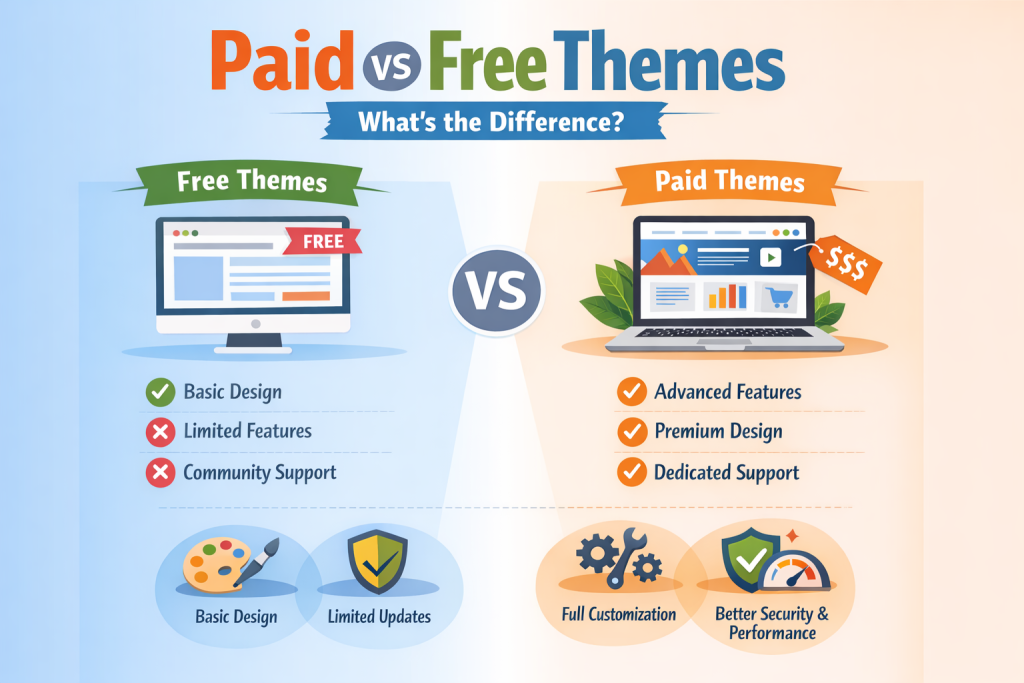
When building a website, choosing the right theme is one of the most important decisions. Whether you are creating a blog, business website, or online store, themes control the design, layout, and user experience of your site. Themes generally fall into two categories: free themes and paid (premium) themes. Understanding the difference between paid and free themes can help you make the right choice for your website goals.
What Are Free Themes?
Free themes are templates that are available at no cost. They are commonly found in platforms like WordPress.org and are widely used by beginners.
Advantages of Free Themes
Free themes are budget-friendly, making them ideal for beginners or small projects. They are easy to install and usually come with simple layouts that are quick to set up. Since many free themes are approved by official theme directories, they follow basic coding and security standards.
Disadvantages of Free Themes
Free themes often have limited customization options. Advanced features such as page builders, premium widgets, and design flexibility are usually missing. Support is also minimal or community-based, which can be slow or unreliable. Additionally, free themes may not be updated regularly, leading to compatibility or security issues over time.
What Are Paid (Premium) Themes?
Paid themes are professionally designed templates that require a one-time payment or yearly subscription. They are usually sold by theme marketplaces or independent developers.
Advantages of Paid Themes
Premium themes offer advanced customization options, modern designs, and built-in features like sliders, page builders, and SEO optimization tools. They are regularly updated to stay compatible with the latest platform versions. Paid themes also come with dedicated customer support, which is helpful when you face technical issues. Many premium themes are optimized for speed, performance, and mobile responsiveness.
Disadvantages of Paid Themes
The main drawback of paid themes is cost. Some premium themes can be expensive, especially for beginners. Additionally, too many built-in features can sometimes slow down a website if not optimized properly.
Key Differences Between Paid and Free Themes
Design and Features
Free themes usually have basic designs, while paid themes offer professional, polished layouts with advanced functionality.
Customization
Customization options are limited in free themes. Paid themes allow greater control over colors, fonts, layouts, and overall appearance.
Support and Updates
Free themes rely mostly on community support, whereas paid themes provide direct developer support and regular updates.
Security and Performance
Paid themes are generally more secure and optimized for performance, while free themes may lack advanced security and speed enhancements.
Which One Should You Choose?
If you are just starting a blog or testing an idea, a free theme can be a good option. However, if you are building a professional website, business site, or eCommerce store, investing in a paid theme is often worth it for better design, support, and long-term reliability.
Conclusion
The difference between paid and free themes lies in features, flexibility, support, and overall quality. Free themes are suitable for beginners and small projects, while paid themes are ideal for professional and scalable websites. Choosing the right theme depends on your budget, website goals, and future growth plans.